- MARKET TRENDS
- 8 Jan 2026
PFAS Rules Spur Action as US Regulatory Ground Shifts
New enforceable PFAS limits push utilities and suppliers to act, even as the long-term US regulatory picture remains in flux
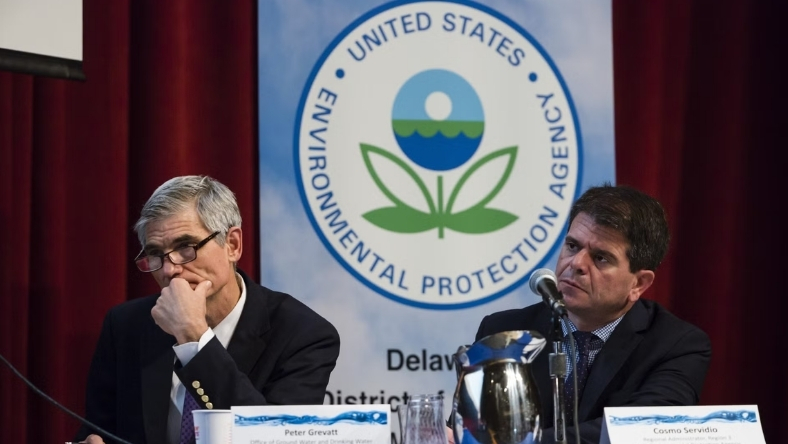
For years America’s approach to PFAS was heavy on warnings and light on force. That has changed. In April 2024 the Environmental Protection Agency (EPA) set legally binding limits for six of the best-known “forever chemicals” in drinking water. Utilities must comply within a few years or face penalties. Guidance has become law.
The rule is narrow but consequential. It covers PFOA, PFOS and four other PFAS compounds, replacing earlier advisory thresholds with enforceable standards. For water systems, this offers clarity of a sort. The ceiling is now fixed, at least for those substances. Investment decisions that had been delayed by uncertainty are moving ahead.
Yet the certainty is incomplete. EPA officials have stressed that expanding regulation beyond the initial six chemicals would require new scientific review and public consultation. That caution matters. There are thousands of PFAS compounds, and utilities are being asked to build treatment systems meant to last decades without knowing how far regulation might eventually reach.
Other doubts linger. Industry groups continue to question the cost and technical feasibility of the rule, as well as its legal durability. Court challenges remain possible. The framework feels less like a final settlement than a foundation likely to be built upon.
Utilities are responding pragmatically. Many large systems already use granular activated carbon or similar technologies to remove emerging contaminants. The task now is to scale those systems, optimise performance and secure financing, while keeping options open should standards tighten. Federal and state funding, including money from the Bipartisan Infrastructure Law, is helping to unlock early investment even as the policy debate continues.
Suppliers are adjusting too. Analysts see PFAS rules accelerating a shift toward bundled offerings that combine treatment equipment, operational services and regulatory support. The aim is not merely to meet today’s limits, but to manage compliance risk over time.
Big water-technology firms emphasise their scale and balance sheets, arguing that long-term regulation favours depth and resilience. Smaller companies still drive innovation, particularly in adsorption, membrane and destruction technologies, but increasingly do so through partnerships or platform models.
The result is a market propelled by regulation yet shadowed by uncertainty. The line has been drawn. How far it will move remains an open question